
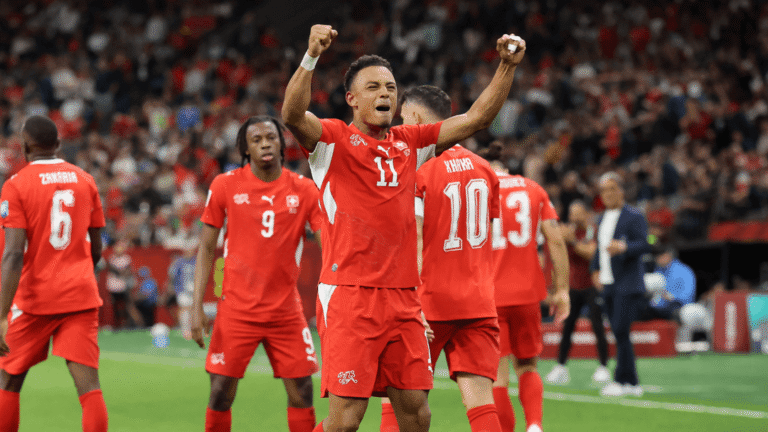
Switzerland reached the FIFA World Cup Round of 16 after a disciplined and clinical 2-0 victory over Algeria, ending an 88-year wait for a knockout-stage triumph. Goals from Breel Embolo and Dan Ndoye sealed a memorable night as the Swiss finally celebrated their first World Cup knockout win since 1938, producing a composed display that combined defensive organization with attacking efficiency.
The match began at a lively pace, with Algeria looking confident and eager to continue their impressive tournament run. Vladimir Petkovic’s side pressed high in the opening exchanges and almost took the lead inside the first few minutes. Houssem Aouar found space inside the penalty area after a dangerous delivery from the right, but his effort failed to trouble the Swiss goal, allowing Switzerland to survive an early scare.
Switzerland responded immediately, showing the clinical edge that would define their performance. Their first meaningful attack resulted in the opening goal after Johan Manzambi displayed excellent skill to beat his marker before delivering a precise cross into the penalty area. Breel Embolo timed his run perfectly and guided the ball beyond the Algerian goalkeeper with a composed finish, giving Switzerland a valuable early advantage. (
The goal shifted the momentum firmly in Switzerland’s favour. While Algeria continued to enjoy spells of possession, the Swiss defence remained compact and disciplined, limiting clear scoring opportunities. Every attack from Algeria was met with strong positioning and intelligent defending, forcing their opponents into speculative efforts from distance.
Midfield control also played a major role in Switzerland’s success. Their ability to recycle possession and slow the tempo frustrated Algeria, who struggled to create sustained pressure despite enjoying significant periods on the ball. Whenever Algeria committed players forward, Switzerland looked dangerous on the counterattack, using the pace of their forwards to stretch the opposition defence.
As the first half progressed, Switzerland created several promising openings without extending their lead. Embolo remained a constant threat with intelligent movement, while Manzambi continued to trouble Algeria with his direct running and creativity. Although Algeria defended with determination, they found it increasingly difficult to contain Switzerland’s attacking transitions.
Algeria emerged after the break determined to find an equaliser and pushed more players into attacking positions. Their urgency created greater intensity, but Switzerland continued to defend with remarkable composure. Goalkeeper Yann Sommer was called into action when necessary, while the defensive unit maintained excellent communication to keep Algeria at bay.
With Algeria committing numbers forward, Switzerland found more space to exploit. Their patience eventually paid off midway through the second half. A swift attacking move created space for Dan Ndoye, who calmly finished to double Switzerland’s advantage and effectively put the contest beyond Algeria’s reach. The goal rewarded another well-executed attacking move and highlighted Switzerland’s efficiency in front of goal.
The second goal visibly affected Algeria, whose belief gradually faded as time ran out. Despite introducing fresh attacking players from the bench, they struggled to break through Switzerland’s disciplined defensive shape. Crosses into the box were comfortably cleared, while long-range efforts failed to seriously threaten the Swiss goalkeeper.
Switzerland managed the closing stages professionally, slowing the tempo whenever possible and keeping possession intelligently. Their experience showed as they refused to allow Algeria any route back into the match, protecting their clean sheet until the final whistle.
The victory represented far more than simple progression to the next round. Switzerland had repeatedly fallen short in World Cup knockout matches across recent tournaments despite consistently qualifying for the competition. This success finally ended decades of frustration and gave the current generation its place in Swiss football history. It was the nation’s first World Cup knockout victory since defeating Germany in the quarter-finals of the 1938 tournament, ending an 88-year wait.
Breel Embolo once again demonstrated his importance to the national team. His intelligent movement, physical presence and composed finishing provided Switzerland with the perfect platform for victory. Meanwhile, Dan Ndoye delivered another influential performance, combining relentless work rate with the decisive second goal that secured qualification.
Johan Manzambi also earned widespread praise despite not scoring. The young midfielder produced the assist for Embolo’s opener and repeatedly troubled Algeria with his dribbling and creativity, underlining why he has attracted growing attention during the tournament.
For Algeria, the defeat marked a disappointing end to an encouraging World Cup campaign. They competed with energy and commitment throughout the tournament but ultimately lacked the cutting edge required against a disciplined Swiss side. Missed opportunities early in the game proved costly, and they were punished by an opponent that converted its chances with ruthless efficiency.
Switzerland now advance to the Round of 16 full of confidence, where they will face Colombia following another impressive knockout result. With three consecutive World Cup victories and growing belief within the squad, Murat Yakin’s team will feel capable of challenging any remaining opponent in the tournament.
Their latest success will be remembered not only for the result but also for its historical significance. After nearly nine decades of waiting, Switzerland have finally broken their World Cup knockout curse. Built on defensive discipline, clinical finishing and collective determination, this victory could become one of the defining moments in Swiss football history as their journey at the 2026 FIFA World Cup continues.