
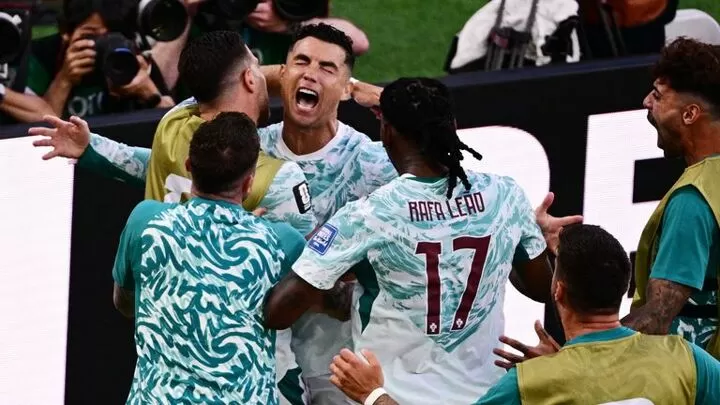
Portugal booked their place in the FIFA World Cup Round of 16 after overcoming Croatia 2-1 in a dramatic knockout contest that delivered quality football, emotional moments and a tense finish. The victory ensured Cristiano Ronaldo’s pursuit of another World Cup title remained alive, while Croatia’s campaign ended in heartbreaking fashion after a late VAR review denied them a dramatic equaliser.
It was a contest featuring two experienced European nations with generations of footballing talent. Portugal entered the match knowing expectations were high around a squad blending established stars with emerging talent, while Croatia hoped their experienced midfield, led by Luka Modrić, could inspire another memorable run on football’s biggest stage.
The opening exchanges reflected the importance of the occasion. Neither side wanted to concede possession cheaply, resulting in a cautious start with both teams focusing on defensive discipline. Croatia enjoyed lengthy spells on the ball through their midfield, while Portugal looked dangerous whenever they attacked quickly through the wide areas.
Portugal created the first clear opportunity after finding space behind Croatia’s defensive line. Quick passing opened the field before a dangerous cross flashed across the penalty area, but Croatia managed to recover and clear the danger before the finish could be applied.
Croatia responded with confidence. Luka Modrić dictated the tempo with his trademark passing range, switching play from one flank to the other while encouraging his teammates to push higher. His composure helped Croatia settle after Portugal’s bright opening and allowed them to establish periods of sustained pressure.
Despite Croatia’s growing control of possession, Portugal struck first through an efficient attacking move. A swift transition caught Croatia’s defence out of position, allowing Portugal to move the ball quickly into the final third before applying a composed finish that gave the goalkeeper little chance. The breakthrough rewarded Portugal’s willingness to attack with pace whenever opportunities appeared.
The goal changed the rhythm of the contest. Croatia were forced to increase the tempo, committing more players forward in search of an immediate response. Portugal, meanwhile, remained patient, trusting their defensive structure while waiting for opportunities to counterattack.
Cristiano Ronaldo remained a central figure throughout the first half. Although closely marked whenever he entered dangerous areas, his movement continually created space for teammates. Even when not directly involved in attacks, his positioning demanded constant attention from Croatia’s defenders.
Croatia eventually found their equaliser after an impressive attacking sequence. Their persistence was rewarded when sustained pressure inside Portugal’s penalty area resulted in a clinical finish that restored parity. The goal lifted Croatian confidence and briefly shifted momentum in their favour as they entered the closing stages of the first half with renewed belief.
The second half began at an even higher intensity. Both teams recognised that one decisive moment could determine who continued their World Cup journey. Midfield challenges became more competitive, while attacks developed with greater urgency.
Portugal gradually regained control by pressing higher up the pitch. Their midfield disrupted Croatia’s passing rhythm, forcing turnovers that created dangerous attacking situations. As the pressure mounted, Portugal found the breakthrough once again through a well-worked move that demonstrated their attacking quality. Precise passing around the edge of the penalty area created an opening before a confident finish restored Portugal’s advantage.
Croatia refused to surrender despite falling behind for a second time. Their experienced players continued encouraging teammates forward, believing another equaliser remained possible. Luka Modrić, displaying the vision and composure that have defined his remarkable career, repeatedly looked to unlock Portugal’s organised defence with incisive passes into dangerous areas.
As the match entered its final minutes, Croatia threw numbers forward in search of one last opportunity. Portugal defended courageously, blocking crosses and closing down shooting angles while attempting to protect their narrow lead.
The drama reached its peak deep into stoppage time. Croatia believed they had rescued the match when the ball found the back of the net following a frantic attack inside Portugal’s penalty area. Celebrations erupted among Croatian players and supporters, convinced extra time awaited.
However, the referee delayed the restart after receiving communication from the Video Assistant Referee. Following a review, the goal was disallowed for an infringement during the attacking move. The decision left Croatia devastated while Portugal celebrated as though they had scored themselves, knowing the review had preserved their place in the tournament.
The final whistle arrived moments later, confirming Portugal’s progression and ending Croatia’s World Cup hopes.
For Cristiano Ronaldo, the victory represented another significant chapter in an extraordinary international career. Although the veteran forward was not the only headline performer, simply remaining in the competition keeps alive his ambition of adding the one major trophy that has long defined the final objective of his remarkable career.
Portugal’s performance also highlighted the balance within Roberto Martínez’s squad. Their defensive organisation limited Croatia’s chances for long periods, while the attack remained clinical when opportunities emerged. Rather than relying solely on individual brilliance, Portugal demonstrated the collective discipline often required to succeed in knockout football.
Croatia leave the tournament with considerable pride despite the disappointment. They once again competed fearlessly against one of Europe’s strongest teams and remained in contention until the final moments. Their technical quality, tactical discipline and resilience were evident throughout the contest, but the narrow margin ultimately worked against them.
Much of the post-match attention naturally focused on Luka Modrić. The Croatian captain has been one of the defining midfielders of his generation, leading his country through multiple unforgettable international campaigns. If this proves to be his final World Cup appearance, it closes an era marked by consistency, elegance and exceptional leadership. His influence on Croatian football extends well beyond statistics, inspiring a generation of players who have watched him compete at the highest level for nearly two decades.
Portugal now move forward with growing confidence as the knockout rounds become increasingly demanding. Victories in this stage are often decided by discipline, composure and small margins, qualities they displayed throughout the contest. With experienced leaders guiding a talented squad, Portugal will believe they possess the tools to challenge any remaining opponent.
For Croatia, elimination hurts because of how close they came to forcing extra time. A late celebration transformed into disappointment after the VAR review, illustrating once again how modern football can change dramatically within seconds.
Ultimately, Portugal’s efficiency in front of goal, defensive resilience under pressure and ability to remain composed during the closing moments proved decisive. Their 2-1 victory keeps their World Cup hopes alive, while Croatia depart knowing they pushed one of Europe’s strongest sides to the limit in a memorable knockout encounter.