
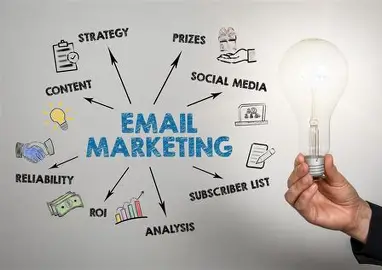
In today’s fast-changing digital landscape, businesses have access to a wide variety of marketing channels. Social media platforms, search engine advertising, influencer marketing, and video content have all become important tools for reaching customers. However, despite the rapid growth of these newer channels, email marketing continues to stand out as one of the most effective and profitable marketing strategies available. Many businesses, from small startups to large corporations, rely on email marketing because it consistently delivers strong returns on investment (ROI) while helping companies build lasting relationships with their customers.
One of the main reasons email marketing remains successful is its direct nature. Unlike social media platforms, where algorithms determine whether content reaches an audience, emails are delivered directly to subscribers’ inboxes. This direct communication gives businesses greater control over their messaging and increases the likelihood that customers will see important updates, promotions, and announcements. As a result, email marketing often achieves higher engagement rates compared to many other digital marketing channels.
Another key factor behind the success of email marketing is personalization. Modern consumers expect businesses to understand their needs and preferences. Generic messages sent to large audiences are becoming less effective, while personalized content is generating stronger results. Businesses now use customer data to create targeted email campaigns based on factors such as purchasing history, browsing behavior, location, and interests. By delivering relevant content to individual subscribers, companies can increase open rates, click-through rates, and conversions.
Audience segmentation has also become a major driver of email marketing performance. Instead of sending the same message to every subscriber, marketers divide their audiences into smaller groups with shared characteristics. For example, a retailer may create separate email campaigns for new customers, loyal customers, and inactive customers. Each group receives content tailored to its specific needs and interests. This approach improves customer experiences while maximizing the effectiveness of marketing efforts.
Automation technology has further enhanced the value of email marketing. Businesses can now create automated workflows that send messages based on customer actions or specific triggers. Welcome emails, abandoned cart reminders, birthday offers, and follow-up messages can all be delivered automatically without requiring manual effort. Automation saves time, improves efficiency, and ensures that customers receive relevant communications at the right moments throughout their journey.
Email marketing is also highly cost-effective compared to many other advertising methods. Running large-scale social media or search advertising campaigns can require significant budgets. In contrast, email campaigns can reach thousands of subscribers at a relatively low cost. This affordability makes email marketing especially attractive for small and medium-sized businesses that may have limited marketing resources. By investing in high-quality email campaigns, businesses can generate substantial revenue without overspending on advertising.
Customer relationship building is another important advantage of email marketing. Successful businesses understand that long-term growth depends not only on attracting new customers but also on retaining existing ones. Regular email communication helps companies stay connected with their audiences, share valuable information, and maintain customer loyalty. Whether providing educational content, exclusive offers, or company updates, email allows businesses to nurture relationships over time and keep customers engaged with their brand.
The ability to measure results accurately is another reason marketers continue to value email campaigns. Most email marketing platforms provide detailed analytics that track important metrics such as open rates, click-through rates, conversion rates, and unsubscribe rates. These insights allow businesses to evaluate campaign performance and make data-driven decisions. Marketers can identify what works, adjust strategies when necessary, and continuously improve future campaigns based on real customer behavior.
Mobile technology has also contributed to the continued success of email marketing. Today, millions of people check their emails on smartphones and tablets multiple times each day. This frequent access creates more opportunities for businesses to connect with customers wherever they are. Marketers have responded by designing mobile-friendly emails that are easy to read and interact with on smaller screens. Optimized email experiences help improve engagement and increase the likelihood of conversions.
In addition to driving sales, email marketing plays an important role in supporting broader marketing strategies. Businesses often use email to promote blog articles, webinars, product launches, social media content, and special events. By integrating email with other marketing channels, companies can create a more cohesive customer experience and maximize the reach of their content. Email serves as a powerful distribution channel that strengthens overall marketing efforts.
Trust remains a critical element of successful email marketing. Consumers are increasingly concerned about privacy and data security. Businesses that prioritize transparency, obtain proper consent, and respect subscriber preferences are more likely to build trust with their audiences. Providing valuable content rather than excessive promotional messages can help maintain positive relationships and encourage long-term engagement. Trustworthy brands often enjoy higher customer retention rates and stronger loyalty.
Artificial intelligence and advanced analytics are expected to shape the future of email marketing even further. AI-powered tools can help marketers optimize subject lines, predict customer behavior, personalize content, and determine the best times to send messages. These innovations will allow businesses to deliver even more relevant and effective email experiences while improving overall campaign performance.
Although digital marketing continues to evolve, email marketing remains one of the most reliable and profitable channels available to businesses. Through personalization, audience segmentation, automation, and data-driven optimization, companies can achieve impressive results while maintaining meaningful customer relationships. As technology advances and consumer expectations continue to change, email marketing is likely to remain a valuable tool for businesses seeking sustainable growth and long-term success. For marketers focused on maximizing return on investment, email continues to prove that it is far from outdated and remains a cornerstone of effective digital marketing strategies..