
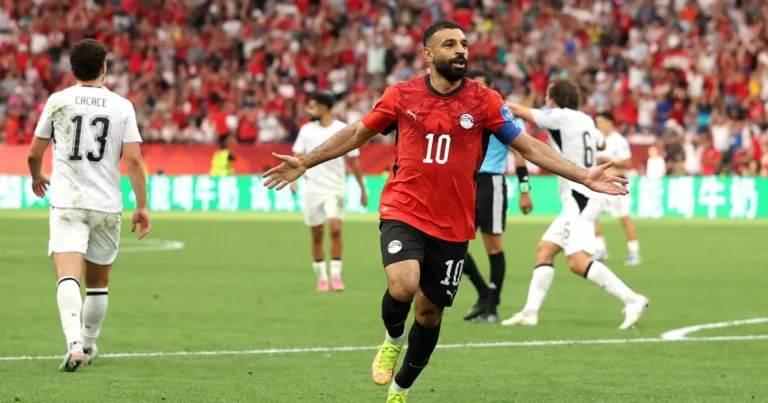
2026 FIFA World Cup history was made in Vancouver as Egypt secured a memorable 3–1 victory over New Zealand. Led by captain Mohamed Salah, the Pharaohs produced a confident performance to claim their first-ever World Cup victory in the city.
The result was a major moment for Egypt, who had been searching for a breakthrough on football’s biggest stage. Their determination, experience, and attacking quality were clear throughout the match, while Salah once again proved why he remains one of the most influential players in international football.
New Zealand entered the game hoping to create a historic result of their own. The team showed energy and commitment, but they struggled to contain Egypt’s attacking players, especially when the Pharaohs increased the pressure in the final third.
From the opening minutes, Egypt looked comfortable with the ball. Their midfield controlled possession and allowed their attackers to find dangerous positions. Salah’s movement caused constant problems for the New Zealand defense, as he frequently dropped deeper to create opportunities before moving forward into attacking areas.
New Zealand attempted to match Egypt’s intensity with a physical and organized approach. They worked hard defensively and looked for opportunities through quick counterattacks. However, Egypt’s experience allowed them to remain patient and continue searching for openings.
The breakthrough eventually arrived when Egypt’s attacking pressure paid off. Salah played a key role in creating danger, using his skill and awareness to help his team move closer to goal. The Pharaohs’ confidence grew after taking the lead, and they began to control the rhythm of the match.
New Zealand responded by pushing forward and searching for an equalizer. Their efforts were rewarded when they found a way through Egypt’s defense, bringing the score level and giving their supporters hope of a comeback.
The equalizer changed the atmosphere of the match. New Zealand gained confidence, while Egypt faced pressure to regain control. However, the Pharaohs showed their experience and refused to allow the momentum to shift completely.
Salah became the central figure once again. His leadership and ability to perform in important moments helped Egypt regain their advantage. Whether creating chances, holding possession, or encouraging teammates, the Egyptian captain played a vital role throughout the contest.
Egypt’s second goal restored their confidence and forced New Zealand to take greater risks. As the match entered its later stages, those risks created more space for Egypt’s attackers to exploit.
The Pharaohs eventually added another goal to secure a 3–1 victory. The final score reflected Egypt’s stronger attacking performance and their ability to manage pressure during difficult moments.
For Egypt, the win represented much more than three points. It was a historic achievement and a statement that the team could compete successfully at the global level. The victory also increased belief among Egyptian supporters that their national team could make a deeper impact in the tournament.
Salah’s contribution was particularly significant. As one of Egypt’s greatest footballers, he carried the expectations of millions of fans into the competition. His leadership, professionalism, and attacking ability once again demonstrated his importance to the national team.
The match also highlighted the progress of Egyptian football. Over recent years, Egypt has continued developing talented players and building a stronger football culture. Performances like this show the potential of African teams to challenge established football nations.
For New Zealand, the defeat was disappointing but provided valuable experience. The team showed determination and fighting spirit, but they struggled against an Egyptian side that was more effective in key moments.
New Zealand’s players continued competing until the final whistle, showing the resilience that has become a major part of their football identity. Although the result did not go their way, the tournament offered an opportunity for their squad to test themselves against elite opposition.
Egypt’s victory in Vancouver will be remembered as a special chapter in the country’s World Cup history. The combination of Salah’s influence, strong teamwork, and efficient finishing created a performance that supporters will celebrate for years.
The Pharaohs demonstrated that success at the World Cup requires more than individual talent. Their organization, determination, and ability to respond under pressure were equally important in securing the win.
As the tournament continues, Egypt will take confidence from this performance. Their players have shown they can handle the intensity of World Cup football, and their supporters will now hope this victory becomes the foundation for further success.
For Mohamed Salah, the night was another reminder of his status as a football icon. His influence extended beyond goals and assists; he provided leadership and inspiration when his team needed it most.
The final whistle confirmed a historic night for Egypt and a difficult one for New Zealand. The Pharaohs walked away with a famous victory, while New Zealand left with lessons gained from competing on the world stage.
In Vancouver, Egypt created a memorable World Cup moment — one built on belief, teamwork, and the brilliance of Mohamed Salah.
championclick.com