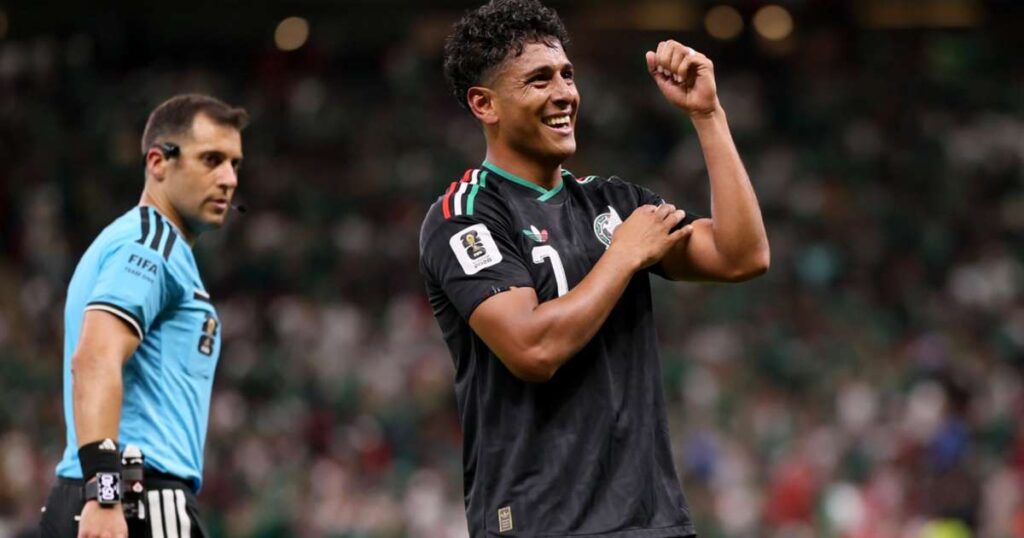
Mexico secured their place in the knockout stages of the 2026 FIFA World Cup after a hard-fought 1-0 victory over South Korea, with a costly mistake from goalkeeper Seung-Gyu Kim proving decisive in a tense Group A encounter. The co-hosts needed only a moment of fortune to claim all three points, and when that opportunity arrived, they seized it with ruthless efficiency.
The match, played in front of a passionate crowd eager to see their national team take another step toward World Cup glory on home soil, was far from a classic. Chances were limited, both sides defended resolutely, and long periods of the contest were dominated by caution rather than creativity. Yet football often turns on the smallest of moments, and Kim’s unfortunate error ultimately became the defining image of the evening.
For Mexico, the victory represented more than just three points. It confirmed their progression to the Round of 32 and strengthened belief that they can mount a meaningful challenge in a tournament they are helping to host. For South Korea, however, it was a painful defeat that left their qualification hopes hanging in the balance.
From the opening whistle, Mexico looked determined to control possession and dictate the tempo. Their midfield circulated the ball confidently, probing for weaknesses in the Korean defensive structure. South Korea, meanwhile, appeared comfortable allowing Mexico to have possession while remaining compact and disciplined without the ball.
The early stages produced few clear opportunities. Mexico enjoyed territorial advantage but struggled to create openings against a well-organized South Korean back line. Whenever the hosts attempted to attack through the middle, they were met by a wall of red shirts determined to protect their penalty area.
South Korea gradually settled into the match and began showing flashes of danger on the counterattack. Their pace in transition occasionally unsettled the Mexican defense, but the final pass often lacked precision. Despite several promising attacks, they failed to seriously test the Mexican goalkeeper during the first half.
As the match progressed, frustration started to build among the home supporters. Mexico’s dominance in possession was not translating into meaningful chances, and South Korea appeared increasingly comfortable absorbing pressure. The game seemed destined to remain goalless unless one team could produce a moment of individual brilliance.
Instead, the breakthrough came through misfortune.
Shortly after the restart, Mexico pressed aggressively as South Korea attempted to play out from the back. Under pressure, goalkeeper Seung-Gyu Kim received a routine pass and looked set to clear the danger. However, his touch was heavier than intended, allowing a Mexican attacker to close down the space rapidly.
In a split second, the situation turned disastrous for South Korea. Kim’s attempted recovery only compounded the problem, and the loose ball fell kindly for Mexico, who capitalized immediately. The finish itself was straightforward, but the goal owed everything to the goalkeeper’s lapse in concentration.
The stadium erupted.
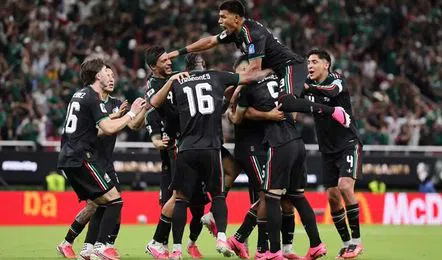
Mexico’s players celebrated wildly, knowing how significant the breakthrough could prove. In matches of such importance, gifts are rarely refused, and the hosts had been handed exactly the opportunity they needed.
For Kim, the moment was devastating. Goalkeepers often endure a uniquely cruel reality in football: one mistake can overshadow an otherwise solid performance. Until that point, he had looked composed and dependable. Yet the error instantly transformed the narrative of both his evening and the match itself.
To South Korea’s credit, they responded positively to falling behind. Rather than retreating into disappointment, they pushed forward in search of an equalizer. Their attacking players displayed greater urgency, moving the ball more quickly and taking additional risks in possession.
Mexico suddenly found themselves under pressure. The confidence that had characterized their first-half performance gave way to a more cautious approach as they sought to protect their slender advantage. Defenders threw themselves into challenges, midfielders worked tirelessly to close down space, and the entire team showed a willingness to sacrifice for the result.
South Korea created several encouraging situations during the final half-hour. Crosses into the penalty area caused concern, while long-range efforts forced Mexico’s defense to remain alert. However, the decisive final touch continued to elude them.
The closer the match moved toward full time, the more desperate South Korea became. Every attack carried a sense of urgency. Every clearance by Mexico was greeted with cheers from the crowd. The tension inside the stadium was unmistakable.
Mexico’s experience eventually proved crucial. Rather than chasing a second goal recklessly, they managed the game intelligently. They slowed the tempo when necessary, maintained defensive discipline, and ensured South Korea rarely found the clear opportunity they desperately needed.
When the final whistle arrived, relief swept across the Mexican camp.
The victory confirmed Mexico’s safe passage into the Round of 32 and marked another memorable chapter in their World Cup campaign. While the performance may not have been spectacular, tournament football often rewards resilience as much as flair. Mexico demonstrated patience, organization, and an ability to capitalize on an opponent’s mistake—qualities that can prove invaluable in the knockout stages.
For South Korea, the defeat was particularly difficult because of the manner in which it occurred. They had competed effectively for much of the match and looked capable of earning at least a point. Instead, a single moment of misjudgment left them empty-handed.
Nevertheless, there were positives for the Korean side. Their defensive structure frustrated Mexico for long periods, and their response after conceding showed admirable character. If they can maintain that level of organization while becoming more clinical in attack, they remain capable of achieving positive results in their remaining fixtures.
The spotlight, however, inevitably fell on Seung-Gyu Kim. Goalkeeping errors often attract disproportionate attention because of their direct consequences, and this mistake ultimately determined the outcome. Yet football history is filled with players who have recovered from painful moments to deliver outstanding performances later in tournaments. South Korea will hope their experienced goalkeeper can do exactly that.
For Mexico, attention now shifts toward the knockout rounds. Advancing from the group stage was the immediate objective, but expectations have grown following their
Lorem ipsum dolor sit amet consectetur. Ut enim mauris at vel mi mauris sagittis. Arcu fames lectus habitasse feugiat suspendisse. Ipsum volutpat ornare placerat sit quis semper dui pharetra. Vestibulum a ipsum aenean nisi dictum tempor. Lacinia pharetra donec aliquam egestas lectus ut turpis. Sapien quam urna in quis vivamus pretium ultrices ac hac. Elementum sit nisl elit tincidunt tortor. Adipiscing aenean mattis sit enim nibh imperdiet