
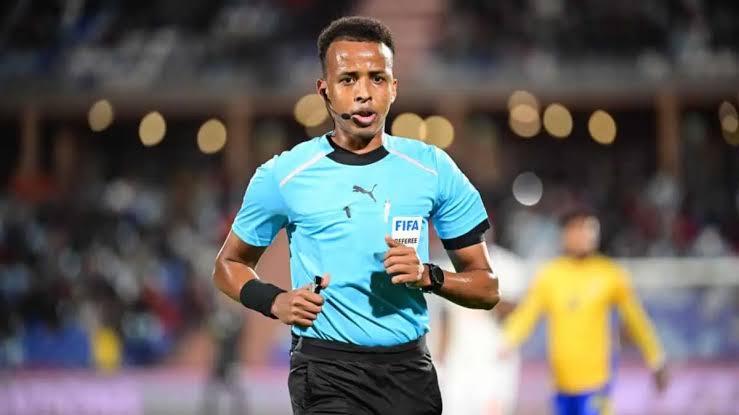
International Somali referee Omar Artan will miss the upcoming FIFA World Cup after being denied a United States visa, ending his hopes of becoming the first Somali official to referee at the men’s World Cup finals.
The 34-year-old referee had been selected as part of the tournament’s officiating team, a historic achievement that was celebrated across Somalia and the wider African football community. Artan’s appointment was seen as a major milestone for Somali football and a symbol of the growing recognition of African referees on the global stage.
Over the past several years, Omar Artan has established himself as one of Africa’s most respected match officials. He has overseen numerous high-profile continental and international matches, earning praise for his professionalism, consistency, and decision-making. In 2025, his achievements were recognized when he was voted Africa’s Best Referee, further cementing his reputation as one of the continent’s elite officials.
His selection for the World Cup was considered a groundbreaking moment for Somalia, a nation that has rarely been represented at the highest levels of international football. For many Somalis, Artan’s inclusion in the tournament represented more than a personal achievement; it was a source of national pride and an inspiration for young people pursuing careers in sports.
However, those hopes were dashed when Artan was unable to secure the visa required to enter the United States, one of the host countries for the tournament. Although officials have not publicly disclosed the exact reasons behind the visa denial, reports suggest that immigration and entry requirements played a key role in the decision.
The development has sparked disappointment among football supporters and sports officials across Africa. Many observers believe Artan deserved the opportunity to officiate at football’s biggest event, given his experience and outstanding performances in recent years. His absence is seen as a significant loss for African refereeing representation at the tournament.
Football analysts have also highlighted the broader challenges that professionals from developing nations can face when traveling internationally, even when participating in globally recognized events. Artan’s case has renewed discussions about visa accessibility for athletes, officials, and other sports professionals representing their countries on the world stage.
Despite the setback, many within the football community have expressed their support for the Somali referee. Messages of encouragement have flooded social media, with fans praising his accomplishments and acknowledging the barriers he has overcome throughout his career. Supporters have emphasized that the visa issue does not diminish his achievements or the respect he has earned within the game.
Artan’s rise to prominence has been remarkable. Coming from a country that has faced decades of challenges, he worked his way through domestic and regional competitions before earning recognition from international football authorities. His journey has demonstrated determination, resilience, and excellence, making him a role model for aspiring referees across Africa.
While missing the World Cup is undoubtedly a major disappointment, many believe this will not be the defining moment of his career. His selection for the tournament and his recognition as Africa’s top referee remain historic accomplishments that reflect his talent and dedication. Sports experts expect Artan to continue officiating at major international competitions in the years ahead.
For Somalia, the news is disappointing, but Omar Artan’s achievements remain a powerful reminder that Somali talent can compete and excel on the global stage. Although he will not be present at this World Cup, his story continues to inspire a new generation of athletes and officials who dream of representing their country at the highest level of international sport.