
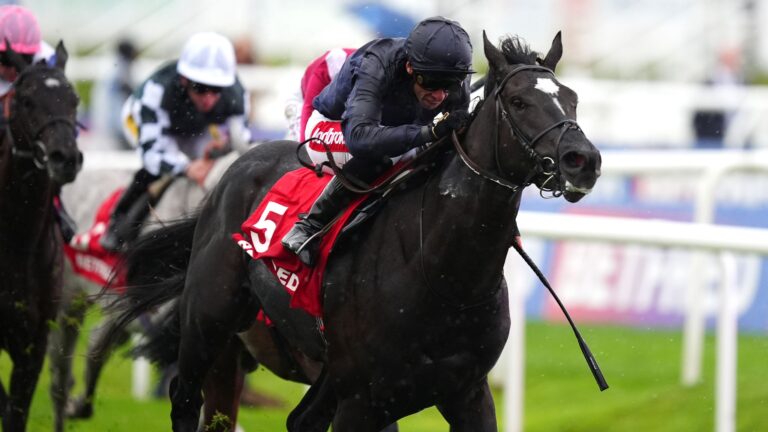
Puerto Rico Emerges as an Intriguing Contender in the St James’s Palace Stakes at Royal Ascot

Royal Ascot is renowned for delivering some of the finest horse racing action in the world, attracting elite horses, top jockeys, and passionate racing enthusiasts from across the globe. Among the many prestigious races held during the famous meeting, the St James’s Palace Stakes stands out as one of the most important contests for three-year-old milers. This Group 1 event regularly showcases future stars of the sport and often provides thrilling finishes that remain memorable for years.

As anticipation builds ahead of this year’s running, much of the discussion has focused on the leading contenders expected to challenge for victory. However, while several highly rated runners dominate the headlines, increasing attention is being directed toward Puerto Rico, a horse who many analysts believe could significantly outperform market expectations.

The St James’s Palace Stakes has a long history of rewarding quality, courage, and tactical intelligence. Run over a mile, the race demands a unique combination of speed and stamina. Horses must possess enough pace to secure a strong position while retaining sufficient energy to produce a decisive finishing effort during the closing stages.

This year’s edition appears particularly competitive. Unlike some renewals where a clear standout dominates the betting market, the current field contains several runners with realistic claims. The absence of an overwhelming favourite has encouraged racing experts and punters to search for value alternatives capable of producing an upset. Puerto Rico has emerged as one of the most discussed names in that category.

Supporters of Puerto Rico point to his consistent progression throughout the season. While he may not yet have achieved the same level of recognition as some of his rivals, his performances suggest that further improvement remains possible. In horse racing, especially among three-year-olds, development can occur rapidly. A horse that appears slightly below the elite level one month can suddenly produce a breakthrough performance on the biggest stage.

One of the qualities that has attracted attention is Puerto Rico’s racing style. He generally settles well during the early stages of a contest, conserving energy before making his challenge later in the race. Such a style can be highly effective in a competitive Group 1 event where excessive early speed often creates opportunities for strong finishers.

Patience frequently proves crucial in major mile races. Horses that expend too much energy battling for position early can struggle during the final furlong when the pressure intensifies. Puerto Rico’s ability to travel comfortably behind the pace could allow him to capitalize if the race develops into a demanding test of stamina and determination.

Another encouraging factor is his finishing strength. In several previous appearances, he has shown the ability to maintain momentum through the latter stages of a race. While some horses weaken under pressure, Puerto Rico appears capable of sustaining his effort when others begin to tire. This characteristic could become particularly valuable if the pace is strong from the outset.

Royal Ascot often produces tactical contests where race dynamics play a major role in determining the outcome. The St James’s Palace Stakes is no exception. Success is rarely determined solely by raw ability. Positioning, timing, and split-second decisions made by jockeys can prove equally important.

For Puerto Rico, securing a smooth passage through the field may be essential. Traffic problems can quickly derail the chances of any runner, particularly in a high-quality race featuring numerous talented opponents. If his jockey can position him effectively and avoid unnecessary interference, he may have the opportunity to unleash his finishing kick at precisely the right moment.

The challenge facing Puerto Rico should not be underestimated. Group 1 races represent the highest level of competition in flat racing. Every participant enters the contest with significant talent and strong credentials. Many of his rivals have already demonstrated their abilities against elite opposition and arrive with impressive form profiles.

Nevertheless, Royal Ascot has always been a venue where emerging stars can announce themselves. Throughout the meeting’s history, relatively overlooked horses have produced career-defining performances to defeat more established rivals. Such surprises are part of what makes the event so captivating for racing fans.

The atmosphere surrounding Royal Ascot also adds a unique dimension to every race. Large crowds, intense media attention, and the prestige associated with the meeting create an environment unlike any other in horse racing. Some horses thrive under these conditions, while others struggle to adapt to the occasion.

For Puerto Rico, handling the occasion may be just as important as handling the opposition. If he remains relaxed before the race and responds positively to the heightened atmosphere, he could be in a position to deliver his best performance. Many trainers believe mental composure is a crucial factor when horses compete at the highest level.

The betting market reflects the uncertainty surrounding the race. With no dominant favourite, punters are evaluating a wide range of possibilities. This has created interest in horses whose odds may not accurately represent their true chances of success. Puerto Rico fits that profile for many observers.

Value selections are particularly attractive in competitive races because they offer the potential for significant returns relative to the perceived risk. While backing favourites can often appear safer, racing history demonstrates that major races frequently produce unexpected results. Horses that are overlooked by the wider public sometimes emerge victorious when conditions suit them perfectly.

Expert analysts have also highlighted the competitive nature of this year’s field. Discussions among racing commentators suggest there is little separating several of the leading contenders. In such circumstances, factors like race pace, track position, and tactical execution can become decisive.

The mile distance should suit Puerto Rico’s strengths. It provides sufficient opportunity for him to settle into rhythm before making his challenge while still allowing him to utilize his finishing speed. If the contest unfolds at a strong tempo, the race could develop in a manner that enhances his prospects.

Ultimately, predicting the outcome of a Group 1 race is never straightforward. Every horse faces questions that can only be answered once the starting gates open. Weather conditions, race tactics, and individual performance levels all contribute to the final result.

However, what makes Puerto Rico such an appealing contender is the possibility that he has not yet revealed the full extent of his ability. Improvement remains one of the most powerful factors in horse racing, particularly among young horses still developing physically and mentally.

As race day approaches, attention will naturally remain focused on the leading names in the betting market. Yet many experienced observers will also keep a close eye on Puerto Rico. If he receives the right race setup, handles the occasion, and continues his upward progression, he could emerge as one of the most significant stories of the meeting.

Whether he wins, places, or simply performs with distinction, Puerto Rico enters the St James’s Palace Stakes as one of the most intriguing runners in the field. In a race filled with quality and uncertainty, that combination makes him a fascinating contender and a horse worthy of serious consideration as Royal Ascot takes centre stage once again.

Facebook
Twitter
LinkedIn
Pinterest
Tumblr

Leave a Reply

Your email address will not be published. Required fields are marked *