
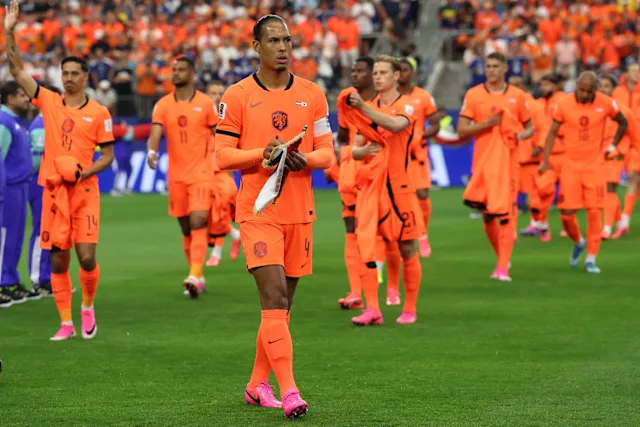
The Netherlands delivered one of the most impressive performances of the FIFA World Cup 2026 so far, overwhelming Sweden in a high-stakes Group F showdown. What had been billed as a battle between two teams hoping to take command of the group instead turned into a statement victory for the Dutch, who combined ruthless finishing with attacking football of the highest quality.
Coming into the match, both nations were full of confidence. The Netherlands had earned a hard-fought draw against Japan in their opening fixture, while Sweden had announced themselves as serious contenders with a convincing victory over Tunisia. With qualification to the knockout stages potentially on the line, expectations were high for an entertaining contest.
Few could have predicted the scale of the Dutch performance.
Strong Team News Before Kickoff
One of the biggest boosts for the Netherlands was the return of midfielder Frenkie de Jong, who was named in the starting lineup after recovering from injury concerns. His inclusion provided greater balance and creativity in midfield, allowing the Dutch to control possession and dictate the pace of the match.
Dutch Start at Full Speed
From the opening whistle, the Netherlands played with intensity and purpose. Their pressing disrupted Sweden’s build-up play, while their attacking movement repeatedly created problems across the Swedish back line.
The breakthrough arrived early and immediately shifted momentum in favour of Ronald Koeman’s side. Sweden struggled to cope with the pace and directness of the Dutch attack, and every forward move seemed to carry danger.
Rather than protecting their advantage, the Netherlands continued to attack aggressively. Their confidence grew with every successful pass and every dangerous run into the Swedish penalty area.
The result was a first-half display that left Sweden chasing shadows for long periods.
Brobbey Leads the Charge
Much of the attention focused on Brian Brobbey, who produced one of the standout individual performances of the tournament.
The powerful striker caused constant problems for Sweden’s defenders with his movement, strength and finishing ability. His goals gave the Netherlands a commanding position and highlighted why many regard him as one of Europe’s most exciting young forwards.
Brobbey’s contribution went beyond scoring. He linked play effectively, held up possession when necessary, and created space for teammates to exploit.
By halftime, Sweden already faced a mountain to climb.
Gakpo Takes Over After the Break
If Sweden hoped the second half would bring an opportunity to recover, those hopes were quickly dashed.
Cody Gakpo emerged as the dominant figure after the interval, demonstrating the quality that has made him one of the most dangerous attackers in international football.
His movement between the lines stretched Sweden’s defence, while his finishing proved clinical whenever opportunities arose. Gakpo’s ability to arrive in the right position at the right time repeatedly punished Swedish mistakes.
Each attack seemed more dangerous than the last, and Sweden found themselves unable to contain the Dutch pressure.
The Netherlands’ attacking football was not only effective but also entertaining. Quick passing combinations, intelligent movement and relentless pressing combined to create one of the most complete performances seen in the group stage so far.
Sweden Show Character
Despite the difficult scoreline, Sweden never completely stopped fighting.
Their attacking players continued searching for openings, and there were moments when they managed to threaten the Dutch goal. Alexander Isak and Viktor Gyökeres both worked tirelessly to create opportunities, while the midfield attempted to regain control whenever possible.
Sweden eventually found a goal through Anthony Elanga, whose finish provided a rare moment of celebration for the Scandinavian side. The goal reflected Sweden’s determination to keep competing even when the result appeared beyond reach.
However, the Dutch response was immediate. Rather than allowing Sweden any hope of a comeback, the Netherlands quickly restored complete control and continued to push forward.
Tactical Masterclass from Koeman
Much credit must go to Dutch coach Ronald Koeman.
After the disappointing defensive lapses that saw his side surrender a lead against Japan, Koeman demanded a stronger and more focused performance. His players responded magnificently.
The Netherlands looked far more balanced than they had in their opening fixture. The midfield controlled possession, the defence remained organized, and the attack operated with impressive efficiency.
The tactical setup also neutralized many of Sweden’s strengths. Isak and Gyökeres rarely received the service they needed, while Swedish attempts to counterattack were frequently stopped before they could develop into genuine threats.
The performance suggested that the Netherlands may be finding their rhythm at exactly the right moment.
What the Result Means for Group F
The victory dramatically changes the complexion of Group F.
After drawing with Japan in their opening match, the Netherlands needed a strong result to strengthen their qualification hopes. They achieved far more than that.
Not only did they secure three valuable points, but they also sent a message to the rest of the tournament. Their attacking quality, squad depth and tactical flexibility make them one of the most dangerous teams in the competition.
For Sweden, the defeat serves as a reminder of how quickly fortunes can change at a World Cup. After their impressive win over Tunisia, expectations had risen significantly. However, facing one of Europe’s strongest teams exposed weaknesses that had not been evident in their opening match.
Their qualification hopes remain alive, but the pressure heading into the final group game has increased considerably.
Looking Ahead
The Netherlands will now turn their attention to their final group-stage fixture against Tunisia. Confidence within the squad is likely to be extremely high after such a dominant display.
Players who may have been criticized after the draw with Japan answered those doubts emphatically. The return of Frenkie de Jong strengthened the midfield, while the attacking partnership led by Brobbey and Gakpo demonstrated frightening potential.
Sweden, meanwhile, must regroup quickly before facing Japan in what could become a decisive match for their tournament future.
Conclusion
This was a night that belonged entirely to the Netherlands. From the first whistle to the last, they played with confidence, precision and attacking ambition. Sweden showed flashes of quality but were ultimately overwhelmed by a Dutch side operating at an exceptionally high level.
The result places the Netherlands in a commanding position within Group F and strengthens belief that Ronald Koeman’s men could become genuine contenders as the tournament progresses. If they continue producing performances of this quality, few teams will look forward to facing them in the knockout ro