
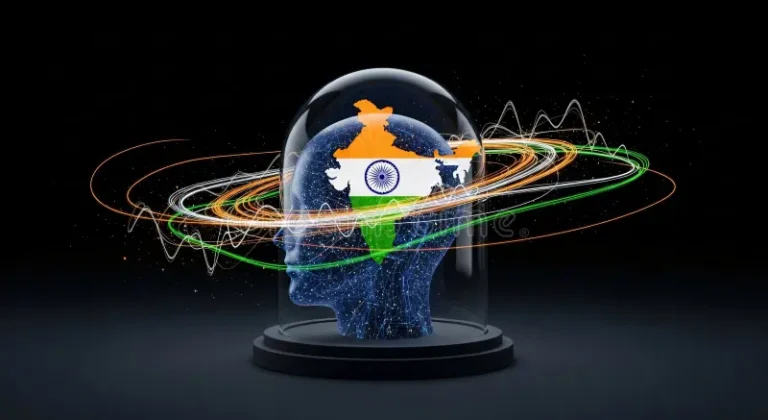
India’s fast-growing artificial intelligence ecosystem is facing a new wave of reflection after reports that access to some of Anthropic’s most advanced AI models was restricted or suspended in certain regions. The development has sparked debate among developers, startups, and policymakers about how dependent India should be on foreign-built AI systems.
The incident has not only raised technical concerns but also broader questions about long-term digital independence, innovation strategy, and the future of AI development in the country.
In recent years, India has emerged as one of the most active markets for artificial intelligence adoption. From small startups to large IT firms, AI tools are being used to improve customer service, automate coding, analyze data, and support education platforms. Many of these tools rely heavily on advanced models developed outside India, particularly from major U.S.-based AI companies.
When access to powerful models becomes limited or restricted, even temporarily, it creates uncertainty for developers who depend on them for daily work. Some startups worry about disruptions to product development, while others see it as a warning sign about over-reliance on external platforms.
For many in the industry, the situation has highlighted a concept often referred to as “AI sovereignty.” This idea focuses on a country’s ability to build, control, and maintain its own artificial intelligence systems without depending too heavily on foreign providers. In India’s case, the discussion is becoming more relevant as AI adoption continues to grow rapidly.
The country already has a strong foundation in software engineering and digital services. India produces a large number of technology graduates every year and has a thriving startup ecosystem. However, building cutting-edge AI models requires more than talent alone. It demands massive computing power, advanced research infrastructure, and long-term investment—resources that are often concentrated in a few global tech companies.
Because of this gap, many Indian companies rely on external AI models to power their products. While this approach has allowed rapid innovation, it also creates vulnerability when access changes due to policy decisions, licensing restrictions, or geopolitical issues.
The recent situation involving Anthropic has reignited discussions about whether India should accelerate efforts to build its own large-scale AI models. Some experts argue that developing domestic AI systems tailored to local languages, industries, and cultural needs could provide a more stable foundation for future growth.
Others believe that complete independence is unrealistic in the short term. Artificial intelligence is a global field, and even the most advanced countries depend on international collaboration. From this perspective, the goal should be balanced: building enough domestic capability to reduce risk while continuing to participate in global AI ecosystems.
The Indian government has already shown interest in strengthening the country’s position in artificial intelligence. Various initiatives have been launched to support research, infrastructure development, and startup funding. Universities and private companies are also investing in machine learning programs and AI-focused innovation labs.
Still, experts warn that catching up with global leaders in AI will take time. The most powerful AI models today require enormous computational resources and billions of dollars in investment. Only a small number of companies worldwide currently have the capacity to train systems at that scale.
Despite these challenges, the debate triggered by the Anthropic-related restrictions has been widely viewed as a turning point. It has reminded industry leaders that access to advanced AI tools cannot always be taken for granted.
For startups, the situation is especially important. Many early-stage companies build their entire products on top of third-party AI systems. Any disruption in access could force them to quickly adapt, switch providers, or even redesign core parts of their technology.
At the same time, some founders see opportunity in the challenge. If access to global models becomes less predictable, it could encourage more investment in local AI development and open the door for new competitors within India’s tech ecosystem.
The broader takeaway from the discussion is that artificial intelligence is no longer just a tool—it is becoming infrastructure. Just like electricity or the internet, AI is increasingly embedded in economic systems, education, and governance. That makes questions about control, access, and ownership more important than ever.
As India continues to expand its digital economy, the choices it makes today about AI strategy will likely shape its technological future for decades. Whether through domestic development, international partnerships, or a hybrid approach, the country’s next steps will play a key role in defining how it participates in the global AI race.
For now, the situation serves as a reminder that in the fast-moving world of artificial intelligence, access and stability are just as important as innovation itself.
June 13, 2026