
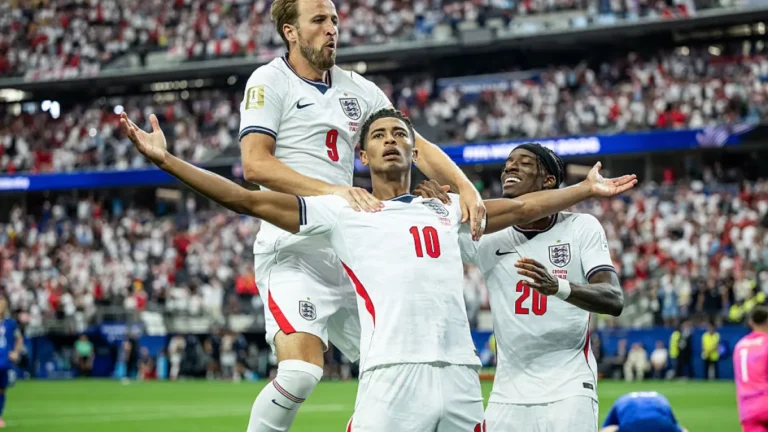
England secured their place in the Round of 16 at the 2026 FIFA World Cup with a hard-fought 2-1 victory over the Democratic Republic of the Congo (DR Congo). The match was far more challenging than many had expected, as the African side produced an organized and determined performance that tested England throughout the contest. Captain Harry Kane proved to be the difference, scoring twice in the final stages of the match to complete a comeback after England had fallen behind early.
The result ensured England’s progress to the knockout stage, where they will face tournament co-hosts Mexico. While the Three Lions celebrated qualification, the performance also highlighted areas that manager Thomas Tuchel will hope to improve before the next round.
From the opening whistle, England attempted to control possession and dictate the tempo. As expected, they dominated the ball and looked to stretch DR Congo through quick passing and movement across the midfield. However, DR Congo remained disciplined defensively and looked dangerous whenever they had opportunities to counterattack.
The first major moment of the match came early when DR Congo stunned England by taking the lead. A well-worked attacking move caught England’s defense off guard, allowing Brian Cipenga to score in the seventh minute. The goal gave the underdogs confidence and forced England into chasing the game much earlier than anticipated.
Conceding so early changed the rhythm of the match. England continued to enjoy the majority of possession but struggled to convert territorial dominance into clear scoring opportunities. DR Congo defended with determination, maintaining their shape and limiting England’s space around the penalty area.
Harry Kane, Jude Bellingham, Phil Foden, and Bukayo Saka all searched for openings, but DR Congo’s defenders consistently blocked shots, intercepted passes, and prevented England from creating high-quality chances. The African side also remained a threat on the break, using their pace to exploit spaces left behind by England’s advancing full-backs.
As the first half progressed, England increased the pressure. They moved the ball more quickly from side to side and attempted to stretch DR Congo’s defensive line. Despite several dangerous crosses into the box, England could not find the finishing touch before halftime.
The second half began much like the first had ended, with England controlling possession while DR Congo defended deep and looked for opportunities to counterattack. England made tactical adjustments to increase attacking intensity, pushing more players into advanced positions and delivering additional crosses into the penalty area.
For much of the second half, however, DR Congo continued to frustrate England. Their goalkeeper and defenders dealt well with crosses, while England’s finishing lacked the precision needed to break through. Time gradually became England’s biggest opponent as the clock ticked toward the final quarter of the match.
The breakthrough finally arrived in the 75th minute. Anthony Gordon delivered an accurate cross into the penalty area, where Harry Kane rose above the defenders to head the ball into the net. The equalizer transformed the atmosphere and shifted momentum firmly in England’s favor.
Rather than settling for extra time, England immediately pushed forward in search of a winning goal. Their confidence grew following Kane’s equalizer, and DR Congo found it increasingly difficult to contain England’s attacking pressure.
The decisive moment came in the 86th minute. Kane once again found space inside the penalty area and finished clinically to score his second goal of the match. The strike completed England’s comeback and ultimately secured a place in the next round.
Harry Kane’s performance once again demonstrated why he remains England’s most reliable goal scorer. Although he had relatively few clear opportunities throughout the match, he remained patient and clinical when the chances finally arrived. His movement inside the penalty area, aerial ability, and composure under pressure proved decisive.
Anthony Gordon also made an important contribution by providing the cross for England’s equalizing goal. His delivery into the box created the opportunity Kane needed to change the course of the match.
Despite the defeat, DR Congo earned considerable praise for their display. They defended with organization, showed discipline throughout the match, and challenged one of the tournament favorites for more than 80 minutes. Their early goal forced England to adapt, and they remained competitive until the closing stages.
England’s overall performance offered both positives and concerns. The team displayed resilience by recovering from an early setback and refusing to panic despite spending much of the match behind. Their patience eventually paid off as sustained pressure produced the goals required for victory.
At the same time, England struggled to break down a well-organized defense for long periods. Against stronger opponents in later rounds, they may need to create clearer chances more consistently and avoid conceding early goals.
Manager Thomas Tuchel will likely view the victory as an important learning experience. Knockout football often demands patience, composure, and the ability to capitalize on limited opportunities. England demonstrated those qualities through Kane’s finishing, but improvements in creativity and defensive concentration may still be necessary.
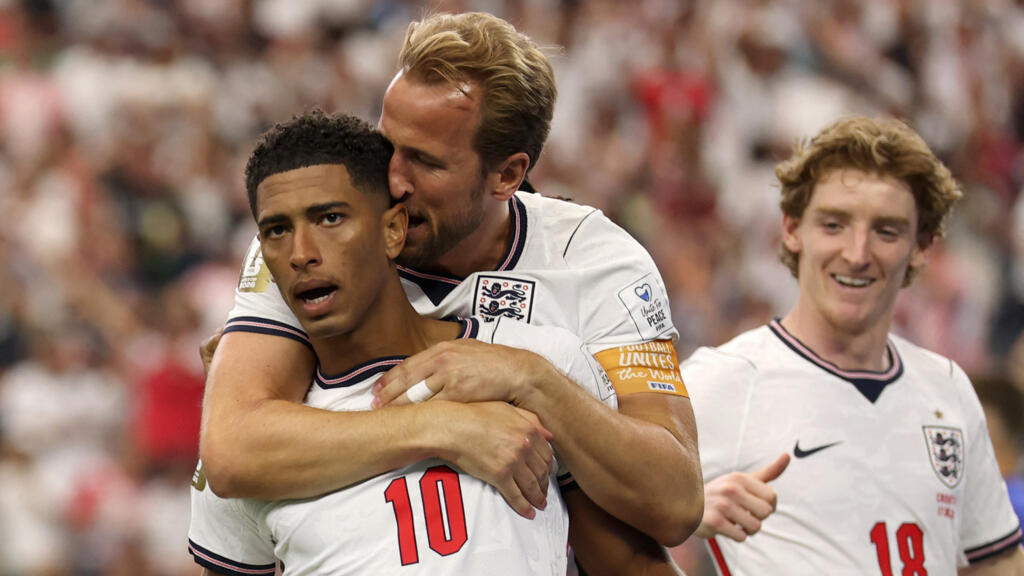
With the win, England advanced to the Round of 16, where they will meet Mexico, one of the tournament’s co-hosts. The upcoming match promises to be a significant challenge, with Mexico expected to enjoy strong support and enter the contest with confidence following their own progression through the knockout stage.
England will hope to carry the momentum from their comeback victory into that encounter. Kane’s return to scoring form is particularly encouraging, as experienced forwards often prove decisive during the latter stages of major international tournaments.
The victory over DR Congo also reinforced an important lesson about World Cup football: every knockout match presents unique challenges regardless of rankings or expectations. DR Congo demonstrated that disciplined defending, tactical organization, and belief can make life extremely difficult for even the strongest teams.
For England supporters, the result ultimately mattered more than the performance. Knockout tournaments are remembered for progression rather than perfection, and the Three Lions achieved their immediate objective by securing a place in the last 16.
Harry Kane’s two goals ensured England avoided one of the tournament’s biggest surprises and kept alive hopes of a deep World Cup run. As the competition moves into its next phase, England will now turn their attention to Mexico, knowing that performances must continue to improve if they are to challenge for the biggest prize in international football.