
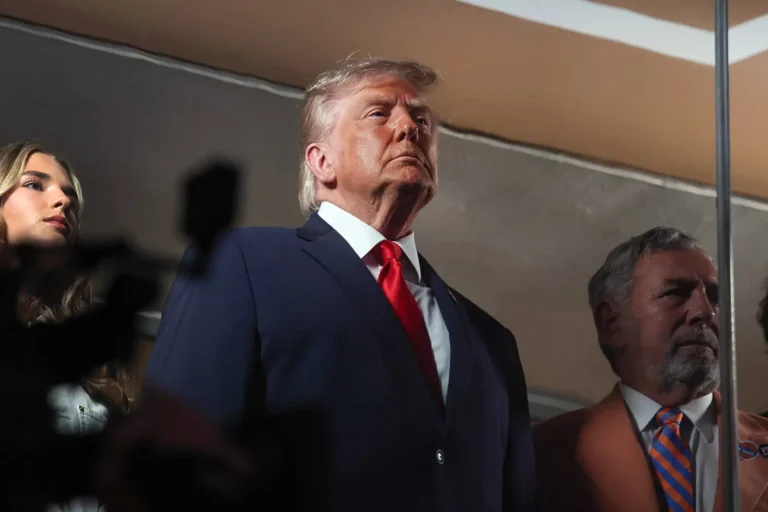
Major sporting events often bring together people from every background, creating moments that extend beyond the competition itself. While fans attend games primarily to watch athletes compete at the highest level, the presence of celebrities, entertainers, and political figures can sometimes generate almost as much discussion as the action on the court. Such was the case during Game 3 of the NBA Finals between the New York Knicks and the San Antonio Spurs, when the appearance of former U.S. President Donald Trump became an unexpected talking point among spectators and viewers.
The NBA Finals represent one of the biggest stages in professional sports. Every game attracts enormous attention from television audiences, journalists, and basketball enthusiasts across the world. The atmosphere inside an arena during a championship series is unlike that of a regular-season contest. Every possession carries significance, every basket can influence momentum, and every moment is magnified under the spotlight.
Game 3 was already expected to be memorable because of the stakes involved. Both the Knicks and the Spurs entered the contest determined to gain an advantage in a fiercely competitive series. Fans packed the arena, creating an electric environment filled with excitement, anticipation, and emotion. Thousands of supporters arrived focused on basketball, eager to witness elite players competing for the sport’s ultimate prize.
However, attention briefly shifted away from the court when Trump appeared on the arena’s giant video screen. The reaction from the crowd was immediate and noticeable. Some spectators applauded, while others expressed their disapproval through loud boos. The mixed response created a brief moment that quickly became one of the evening’s most discussed subjects.
Crowd reactions to public figures are not uncommon in sports. Athletes, entertainers, business leaders, and politicians often attend major events, and fans sometimes use those opportunities to express their opinions. In highly visible settings, reactions can vary significantly depending on the audience, location, and cultural climate. What makes such moments noteworthy is not necessarily the reaction itself, but the way it reflects broader conversations taking place outside the arena.
In today’s media environment, moments that once would have remained inside a stadium can instantly become global topics. Smartphones, social media platforms, and online discussions allow clips to spread rapidly across the internet. Within minutes, videos of the crowd reaction began circulating online, attracting millions of views and generating debate among users from different political and social perspectives.
Supporters of Trump viewed the incident differently from his critics. Some argued that the reaction represented only a portion of the audience and did not accurately reflect public opinion as a whole. Others believed the crowd was exercising its right to express personal views in a public setting. The differing interpretations highlighted the deeply divided nature of modern political discourse.
For many observers, the episode served as another example of how sports and politics frequently intersect. Although professional leagues generally focus on competition and entertainment, major sporting events often become gathering places where broader social and political conversations emerge. The visibility of these events makes them natural stages for public expression, whether intentional or spontaneous.
Historically, sports have reflected societal issues in various ways. Athletes have used their platforms to advocate for causes, fans have voiced opinions on public matters, and political leaders have recognized the influence that sports hold within culture. As a result, moments involving political figures at games are often viewed through a lens that extends beyond the final score.
Despite the attention generated by the crowd’s reaction, the focus inside the arena soon returned to basketball. The players continued competing with intensity, fully concentrated on the championship stakes. Coaches remained engaged in strategy, and fans redirected their energy toward supporting their teams.
The game itself delivered the drama expected from an NBA Finals matchup. Both teams showcased skill, determination, and resilience throughout the contest. Momentum shifted multiple times as each side searched for an advantage. The atmosphere remained energetic, with supporters responding passionately to every major play.
For the Knicks, the series represented an opportunity to achieve something historic. The franchise had spent decades pursuing championship success, and every victory moved them closer to ending a long title drought. The pressure was immense, but so was the motivation. Players understood the significance of the moment not only for themselves but also for generations of fans who had remained loyal through difficult years.
The Spurs, meanwhile, demonstrated why they had reached the Finals. Their talented roster competed with confidence and discipline, refusing to back down against a determined opponent. Their presence on basketball’s biggest stage reflected the strength of their organization and the promise of their future.
As discussion about the Trump moment continued online, many basketball fans emphasized that the game itself deserved the majority of attention. Social media conversations often focus on off-court events because they generate strong reactions, but the performances of the athletes remained the central story of the Finals. Their dedication, preparation, and effort were ultimately what defined the championship series.
The incident also sparked broader conversations about the role of public figures at sporting events. Some people believe sports should remain separate from politics whenever possible, providing a space where individuals can unite around competition and entertainment. Others argue that public figures naturally become part of the experience when attending events viewed by millions of people.
Neither perspective is new. Debates regarding the relationship between sports and public life have existed for decades and are likely to continue. As long as major events attract influential personalities, reactions from audiences will remain part of the overall spectacle.
In the end, the brief crowd response became one of many memorable moments surrounding the NBA Finals. While it generated headlines and online discussion, it did not alter the outcome of the game or the direction of the series. The players remained the main protagonists, and the championship race continued to capture the attention of basketball fans worldwide.
The episode serves as a reminder that modern sports exist within a larger cultural landscape. A basketball game can provide thrilling competition while also reflecting conversations taking place throughout society. Whether viewed as an expression of public opinion,