


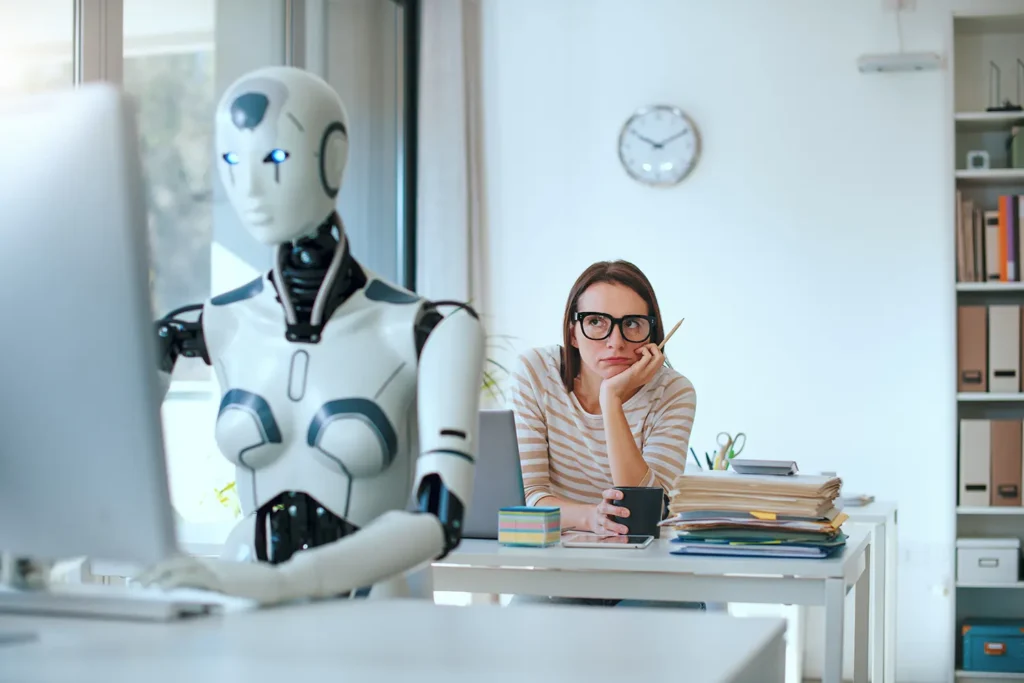
Artificial intelligence (AI) is transforming the global economy at an unprecedented pace. From automating repetitive tasks to improving customer service and boosting productivity, AI is changing how businesses operate across nearly every industry. Companies around the world are investing billions of dollars into AI technologies in hopes of becoming more efficient and competitive.
However, behind the excitement surrounding artificial intelligence lies a growing concern: job losses. Over the past two years, many companies have announced layoffs while simultaneously increasing their investments in AI technologies. This trend has created anxiety among workers who fear that machines and algorithms may eventually replace human jobs.
As AI adoption accelerates, workplace tensions are growing. Employees are becoming increasingly worried about their future, while businesses face difficult questions about balancing technological innovation with social responsibility.
The rise of AI-driven layoffs is no longer a theoretical issue. It is becoming one of the most important challenges facing the modern workforce.
The Rapid Growth of Artificial Intelligence
Artificial intelligence has developed rapidly in recent years. Technologies such as machine learning, natural language processing, and generative AI have made it possible for computers to perform tasks that once required human intelligence.
Businesses have embraced AI because it offers several advantages:
- Faster decision-making.
- Reduced operational costs.
- Increased productivity.
- Improved customer experiences.
- Greater efficiency in handling repetitive tasks.
As these technologies become more advanced, companies are discovering that many jobs can now be performed partially or entirely by AI systems.
This shift is changing the structure of the labor market and raising concerns among workers worldwide.
Why Companies Are Using AI to Cut Jobs
The primary reason companies invest in artificial intelligence is efficiency.
Businesses operate in highly competitive environments where reducing costs and increasing profits are top priorities. AI systems can work continuously without requiring salaries, vacations, or employee benefits.
As a result, many organizations are using AI to automate tasks previously handled by human workers.
Industries experiencing major changes include:
- Customer service
- Marketing
- Data entry
- Administrative work
- Content creation
- Software development
- Financial analysis
Some companies argue that automation allows employees to focus on more important tasks. However, others have directly reduced their workforce after implementing AI solutions.
This has created fears that artificial intelligence may eliminate millions of jobs in the coming years.
Workers Are Becoming Increasingly Concerned
The possibility of losing employment due to artificial intelligence has become a major source of stress for workers.
Employees are asking difficult questions:
- Will my job still exist in five years?
- Should I learn new skills?
- Is my profession at risk of automation?
- How can I compete with AI systems?
These concerns are creating tensions inside workplaces.
Many employees feel uncertain about their future, particularly in industries where automation is advancing rapidly. Some workers worry that companies view AI primarily as a tool for reducing labor costs rather than improving productivity.
This growing anxiety can affect employee morale, productivity, and trust in management.
The Impact on Workplace Relationships
AI-driven layoffs can significantly damage workplace relationships.
When companies reduce staff while investing heavily in artificial intelligence, remaining employees may feel insecure and undervalued.
This situation can create:
Fear and Anxiety
Workers who survive layoffs often fear that they may be next. This uncertainty can lead to increased stress and reduced job satisfaction.
Lower Trust in Management
Employees may lose confidence in company leadership if they believe that executives prioritize technology over people.
Reduced Collaboration
Fear of job loss can create competition among employees rather than teamwork. Workers may become reluctant to share knowledge or assist colleagues.
Increased Burnout
After layoffs, remaining employees are often required to take on additional responsibilities, increasing workloads and stress levels.
These factors contribute to growing workplace tensions and can negatively affect company culture.
Which Jobs Are Most at Risk?
Although AI is unlikely to replace every profession, certain jobs face greater risks than others.
Positions involving repetitive and predictable tasks are generally the most vulnerable.
Examples include:
- Data entry clerks
- Customer support representatives
- Administrative assistants
- Basic accounting positions
- Content moderation jobs
- Simple programming tasks
At the same time, new opportunities are emerging in fields such as:
- Artificial intelligence development
- Data science
- Cybersecurity
- Machine learning engineering
- AI ethics and governance
- Technology consulting
The challenge for workers is adapting to these changes and acquiring new skills.
The Psychological Effects of AI Layoffs
The fear of automation extends beyond financial concerns.
Employment provides more than just income. For many people, work is connected to identity, purpose, and social relationships.
When workers fear replacement by machines, they may experience:
- Stress
- Depression
- Reduced motivation
- Anxiety about the future
- Lower confidence in their abilities
Studies have shown that job insecurity can significantly affect mental health and overall well-being.
As AI adoption increases, companies may need to provide greater emotional and professional support for employees facing uncertainty.
The Debate Over Responsible AI Adoption
The growing wave of AI-driven layoffs has sparked an important debate.
Should companies prioritize efficiency if it results in widespread job losses?
Some experts argue that businesses have a responsibility to retrain employees rather than simply replacing them.
Others believe that technological progress has always changed labor markets and that society will eventually adapt.
History shows that previous technological revolutions eliminated certain jobs while creating entirely new industries and professions.
However, the speed of AI development may make this transition more difficult than previous technological changes.
Governments Are Paying Attention
Governments around the world are increasingly concerned about the impact of artificial intelligence on employment.
Several countries are considering policies such as:
- Worker retraining programs.
- Educational reforms.
- Stronger labor protections.
- Regulations governing AI deployment.
- Financial assistance for displaced workers.
Policymakers understand that managing the transition to an AI-driven economy will require cooperation between governments, businesses, and educational institutions.
The decisions made today could shape the future of work for generations.
Opportunities Hidden Within the Challenge
Despite the concerns, artificial intelligence also presents significant opportunities.
Many experts believe AI will create entirely new industries and millions of new jobs that do not currently exist.
Workers who develop skills in:
- Technology
- Data analysis
- Problem-solving
- Creativity
- Leadership
- Communication
may find themselves in strong positions as the economy evolves.
The key challenge is ensuring that workers have access to education and training that prepares them for the changing labor market.
The Future of Work
Artificial intelligence is unlikely to eliminate all jobs.
Instead, it is more likely to transform how people work.
Many professions will increasingly involve collaboration between humans and AI systems. Workers who can effectively use technology may become more productive and valuable.
However, this transition will require significant adjustments from businesses, governments, and employees alike.
Organizations that successfully balance technological innovation with employee well-being may gain long-term advantages.
Conclusion
Artificial intelligence is reshaping the global economy and creating enormous opportunities for businesses. However, the growing wave of AI-driven layoffs is also generating fear, uncertainty, and workplace tensions.
As companies continue investing in automation, employees are increasingly concerned about their future. The challenge facing society is not whether AI will change the workforce—it already is.
The real question is how businesses, governments, and workers can adapt to these changes in a way that promotes innovation while protecting people and creating new opportunities.
The future of work will undoubtedly include artificial intelligence. Ensuring that this future benefits everyone may be one of the most important challenges of our time.