


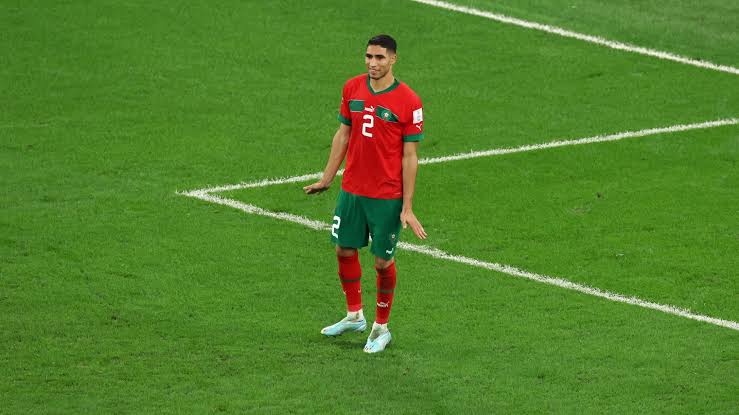
Achraf Hakimi faced a challenging atmosphere during Morocco’s narrow World Cup win over Scotland, where sections of the crowd repeatedly reacted to him with boos and loud jeers whenever he touched the ball. Despite the pressure from the stands, the Moroccan captain continued to perform his duties with focus and discipline throughout the match.
The match, played at Gillette Stadium, was competitive from start to finish, but attention gradually shifted toward the reaction of the Scottish supporters. Each time Hakimi was involved in play, the noise from the crowd increased, creating an intense and unusual environment for a high-level international fixture. The situation became more noticeable during key moments such as defensive interceptions and attacking runs down the right flank.
As the captain of the Morocco national football team, Hakimi played an important leadership role on the pitch. He remained composed under pressure, continuing to support his teammates, organize the defensive line, and contribute to Morocco’s overall structure during the game. His performance was steady despite the distractions from the stands.
The reaction from the crowd became stronger during set pieces and physical challenges, especially in the first half. At times, the stadium atmosphere felt highly charged, with sections of supporters expressing frustration through sustained booing. However, this did not affect Morocco’s game plan, as the team maintained their shape and discipline.
Media coverage also highlighted the unusual intensity directed toward Hakimi. Commentators noted how frequently he was targeted by crowd noise, and discussions began around the reasons behind such a strong reaction in an international match setting. Some analysts linked it to wider narratives surrounding the player, while others viewed it as typical football rivalry behavior amplified by emotions during a World Cup game.
In the background, Hakimi has been under increased media attention due to off-field legal discussions reported in international news. He has consistently denied wrongdoing and stated his willingness to cooperate fully with legal procedures. However, there are currently no football-related sanctions affecting his participation at the tournament level.
Despite the external pressure, Morocco remained focused and secured a valuable victory in their World Cup campaign. The team’s ability to stay organized and disciplined under challenging conditions was seen as a key factor in their success.
The incident has since become part of wider conversations about respect in football, player treatment, and how external narratives can influence crowd behavior during major sporting events.