


Focus Keyword: Email Marketing Guide
Introduction
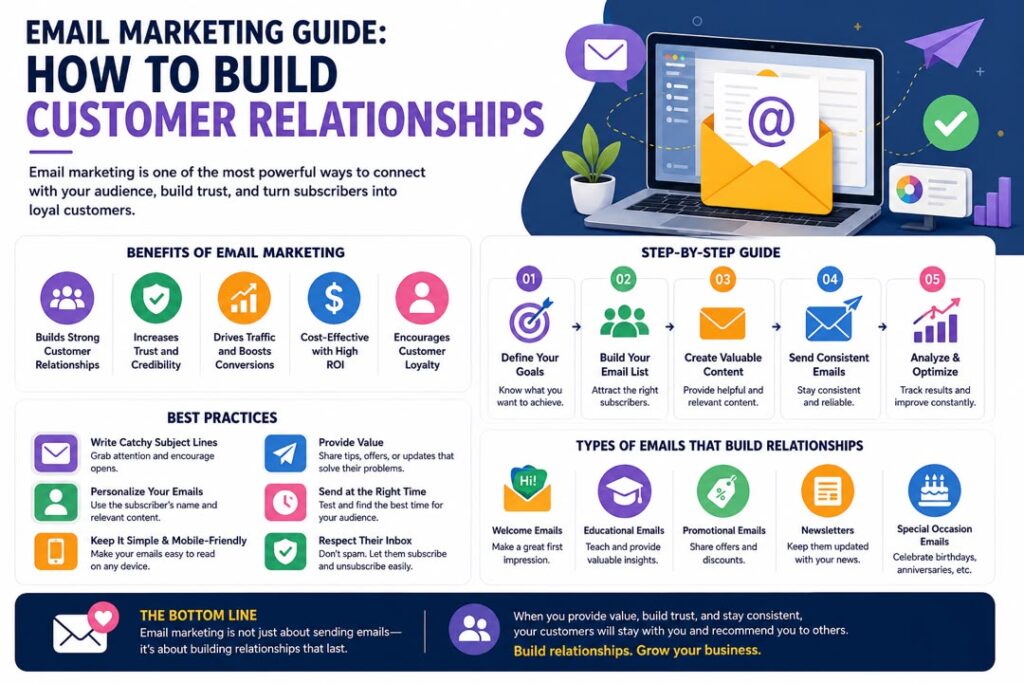
An effective Email Marketing Guide can help businesses build strong customer relationships, increase brand loyalty, and drive more sales. Despite the growth of social media, email marketing remains one of the most reliable and cost-effective digital marketing strategies. It allows businesses to communicate directly with their audience through personalized messages and valuable content.
Whether you own a small business, an online store, or a growing brand, email marketing can help you stay connected with customers and encourage repeat business.
What Is Email Marketing?
Email marketing is the process of sending emails to current and potential customers to promote products, share updates, provide valuable information, and strengthen customer relationships.
Businesses use email marketing to:
- Promote products and services
- Share company news
- Send newsletters
- Announce special offers
- Welcome new subscribers
- Build customer loyalty
A successful email marketing campaign focuses on delivering value rather than simply selling.
Why Email Marketing Is Important
A well-planned Email Marketing Guide helps businesses achieve several goals:
- Build long-term customer relationships
- Increase customer engagement
- Drive website traffic
- Generate qualified leads
- Improve customer retention
- Increase sales and conversions
Unlike many other marketing channels, email allows businesses to reach customers directly in their inbox.
How to Build Customer Relationships with Email Marketing
- Build a Quality Email List
Start by collecting email addresses from people who are genuinely interested in your business.
You can grow your email list through:
- Website sign-up forms
- Newsletter subscriptions
- Free downloadable resources
- Online events or webinars
- Special discounts for new subscribers
Avoid purchasing email lists, as they often lead to low engagement and poor results.
- Send a Welcome Email
The first email creates a lasting impression.
A welcome email should:
- Thank subscribers for joining
- Introduce your business
- Explain what they can expect
- Provide helpful resources
- Encourage further engagement
A friendly welcome helps establish trust from the beginning.
- Personalize Your Emails
Customers appreciate personalized communication.
Include details such as:
- The customer’s name
- Product recommendations based on interests
- Personalized offers
- Relevant content
Personalization makes emails more engaging and improves response rates.
- Provide Valuable Content
Every email should offer value to the reader.
Useful content may include:
- Helpful tips
- Industry news
- Educational articles
- Product guides
- Exclusive discounts
- Customer success stories
Focus on solving problems rather than constantly promoting products.
- Write Clear and Engaging Subject Lines
The subject line determines whether people open your email.
A good subject line should be:
- Short
- Clear
- Interesting
- Relevant
- Honest
Avoid misleading or overly promotional subject lines.
- Maintain a Consistent Schedule
Send emails regularly without overwhelming your subscribers.
Depending on your business, you may choose to send:
- Weekly newsletters
- Monthly updates
- Product announcements
- Seasonal promotions
Consistency helps keep your audience engaged.
- Encourage Customer Interaction
Email marketing is most effective when it creates two-way communication.
Encourage subscribers to:
- Reply with questions
- Leave feedback
- Complete surveys
- Visit your website
- Follow your social media pages
Engagement strengthens customer relationships.
- Measure Your Email Performance
Track key performance metrics to improve future campaigns.
Important metrics include:
- Open rate
- Click-through rate (CTR)
- Conversion rate
- Bounce rate
- Unsubscribe rate
Analyzing these metrics helps you understand what works best for your audience.
Common Email Marketing Mistakes
Avoid these common mistakes:
- Sending too many emails
- Ignoring mobile-friendly design
- Using misleading subject lines
- Sending irrelevant content
- Forgetting to personalize messages
- Not testing campaigns before sending
Avoiding these errors improves customer satisfaction and campaign performance.
Best Practices for Email Marketing
Follow these best practices for long-term success:
- Write clear and valuable content.
- Keep emails simple and easy to read.
- Include a strong call to action (CTA).
- Segment your audience based on interests.
- Test different subject lines and email formats.
- Respect subscriber privacy and provide an easy unsubscribe option.
Benefits of Email Marketing
A successful Email Marketing Guide offers many advantages:
- Stronger customer relationships
- Increased customer loyalty
- Higher website traffic
- Better lead nurturing
- Improved sales and conversions
- Cost-effective marketing
- Measurable results and performance tracking
Conclusion
This Email Marketing Guide shows that email remains one of the most powerful tools for building customer relationships. By creating a quality email list, providing valuable content, personalizing messages, and consistently engaging with subscribers, businesses can build trust, increase loyalty, and achieve long-term growth.
When used correctly, email marketing not only helps retain existing customers but also attracts new ones, making it an essential part of any successful digital marketing strategy.