


Businesses across multiple industries are expanding investments in automation to improve efficiency and reduce operational costs. From manufacturing to logistics and customer service, companies are adopting advanced technologies to streamline workflows and increase productivity. Experts believe automation will remain a major factor in business competitiveness over the coming years.
Over the past few years, automation has slowly shifted from being a “future idea” to something that is now part of everyday business operations. Companies across different industries are increasing their investment in automation technologies, mainly because the pressure to work faster, cheaper, and more efficiently keeps growing. In today’s competitive market, businesses that fail to improve their operations often find it difficult to keep up.
A big reason behind this shift is the rising cost of running a business. Labor costs, supply chain challenges, and customer expectations are all increasing at the same time. Companies are now looking for ways to handle more work without constantly expanding their workforce. Automation has become one of the most practical solutions to this problem.
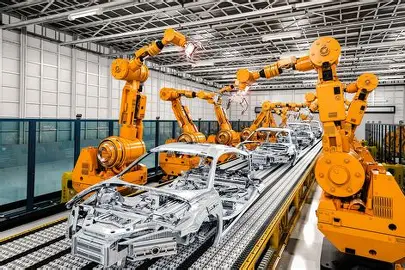
In manufacturing, for example, automation is already deeply integrated into production lines. Machines are now used to handle repetitive tasks such as assembling products, packaging goods, and quality control checks. These systems can operate for long hours without fatigue, which helps companies maintain consistent output. While human workers are still essential, their roles are increasingly focused on supervision and maintenance rather than manual repetitive work.
The logistics sector has also changed significantly. Warehouses that once relied heavily on manual labor are now adopting automated sorting systems, smart tracking tools, and robotics. These technologies help move products faster and more accurately. Delivery companies are also using software to optimize routes, reduce fuel costs, and improve delivery times. As a result, the entire supply chain is becoming more efficient than before.
Customer service is another area where automation is growing quickly. Many companies now use chatbots and automated response systems to handle common customer questions. Instead of waiting for a human agent, customers can get quick answers at any time of the day. This not only improves customer satisfaction but also reduces pressure on support teams, allowing human agents to focus on more complex issues.
One of the main advantages driving automation investment is cost reduction. Although automation systems can be expensive to set up initially, they often lead to long-term savings. Businesses can reduce labor costs, minimize errors, and improve productivity at the same time. For many companies, this long-term benefit outweighs the initial investment.
Another important factor is accuracy. Human workers, no matter how skilled, can make mistakes especially when performing repetitive tasks. Automated systems, on the other hand, can repeat the same process with a high level of consistency. This is especially important in industries like manufacturing, finance, and data processing, where small errors can lead to major losses.
At the same time, automation is changing the nature of work. There is often concern that machines will replace human jobs, and while some roles are being reduced, new opportunities are also being created. Companies now need workers who can manage systems, analyze data, and maintain automated tools. This means the job market is shifting rather than shrinking.
In many cases, automation is actually helping employees focus on more meaningful work. Instead of spending time on repetitive tasks, workers can focus on planning, decision-making, and problem-solving. This shift is making workplaces more efficient and in some cases more satisfying for employees.
Another interesting trend is that automation is no longer limited to large corporations. With the rise of cloud-based tools and affordable software, even small and medium-sized businesses are starting to use automation in their daily operations. This includes automated marketing, customer management systems, and inventory tracking tools. As a result, smaller companies are now able to compete more effectively with larger organizations.
Looking ahead, automation is expected to become even more advanced. Technologies like artificial intelligence and machine learning will continue to improve, making automated systems smarter and more adaptable. Businesses will rely more on systems that can learn from data and make decisions with minimal human input.
However, companies will also need to be careful about how they implement automation. Issues such as data security, job transition, and ethical use of technology will become more important. Businesses that balance innovation with responsibility will likely have the strongest long-term success.
In conclusion, the growing investment in automation technologies shows a clear direction in modern business. Companies are no longer asking whether they should automate, but how quickly they can do it. From manufacturing to logistics and customer service, automation is reshaping how businesses operate and setting new standards for efficiency and performance.