


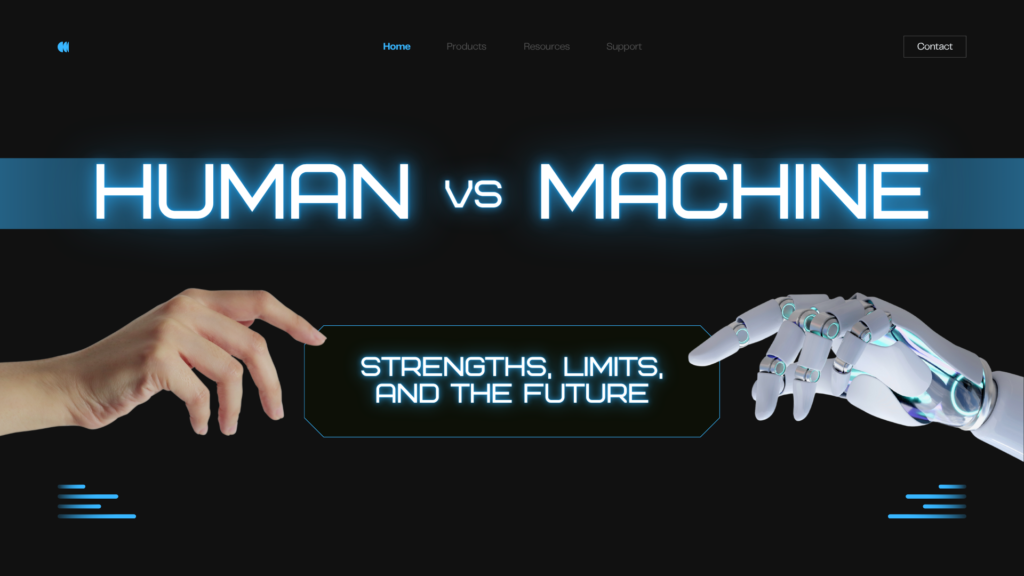
Artificial intelligence has become one of the most discussed technologies in recent years. Every few months, a new AI tool appears and people begin asking the same question: will artificial intelligence eventually replace human workers?
The answer is not as simple as many people think. While AI is becoming more powerful and capable of performing certain tasks faster than humans, there are still many areas where people remain essential. Instead of completely replacing workers, AI is changing how work is done in different industries.
Many businesses are already using artificial intelligence to handle repetitive tasks. Customer support systems, data analysis tools, and automated software can complete work that once required significant human effort. This helps companies save time and improve efficiency.
For example, businesses can use AI to organize information, answer common customer questions, and generate reports. Tasks that previously took hours may now take only a few minutes. Because of this, some workers worry about the future of their jobs.
However, history shows that new technologies often create changes rather than simply eliminating opportunities. When computers became common in offices, many people feared that jobs would disappear. Instead, new careers were created, and workers learned new skills that allowed them to adapt.
The same situation may happen with artificial intelligence. Some routine jobs may change significantly, but new opportunities are also likely to emerge. Businesses will continue needing people who can manage technology, solve problems, communicate with customers, and make important decisions.
One area where humans still have a clear advantage is creativity. AI can generate text, images, and ideas based on existing information, but genuine creativity often comes from personal experiences, emotions, and unique perspectives. Writers, designers, marketers, and other creative professionals continue to play an important role because they bring original thinking to their work.
Communication is another skill that remains difficult to automate completely. Customers often prefer speaking with real people when dealing with complex situations or important decisions. Human interaction builds trust and understanding in ways that technology cannot fully replicate.
Leadership is also something that artificial intelligence cannot easily replace. Managing teams, motivating employees, and making strategic decisions require judgment and emotional intelligence. These qualities are essential in many workplaces and continue to depend on human abilities.
Healthcare provides another example. Although AI can assist doctors by analyzing information and identifying patterns, medical professionals still make critical decisions regarding patient care. People generally trust trained healthcare workers to evaluate situations that require experience, empathy, and responsibility.
Education is similar. Technology can support learning, but teachers do much more than deliver information. They guide students, answer questions, encourage development, and help learners overcome challenges. These responsibilities require human understanding and personal interaction.
At the same time, workers should not ignore the impact of artificial intelligence. As technology continues to improve, certain tasks may become increasingly automated. People who continuously learn new skills and stay updated with technological developments are likely to have more opportunities in the future.
Many experts believe the future workplace will involve collaboration between humans and AI rather than competition. Employees may use AI tools to complete tasks more efficiently while focusing on responsibilities that require creativity, critical thinking, and communication.
Businesses are already adopting this approach. Instead of replacing entire teams, many organizations use AI to assist workers and improve productivity. This allows employees to spend less time on repetitive activities and more time on valuable work.
Looking ahead, artificial intelligence will probably continue transforming industries around the world. Some jobs will change, new careers will emerge, and workers will need to adapt to new technologies. However, the human qualities that drive innovation, leadership, and creativity are unlikely to disappear.
Conclusion
Artificial intelligence is changing the workplace, but it is unlikely to replace all human jobs. While automation can handle certain repetitive tasks, people remain essential in areas that require creativity, communication, leadership, and decision-making.
Rather than viewing AI as a replacement for workers, it may be more accurate to see it as a tool that can help people work more efficiently. Those who adapt, learn new skills, and embrace technology will be better prepared for the opportunities that the future may bring.