
Introduction
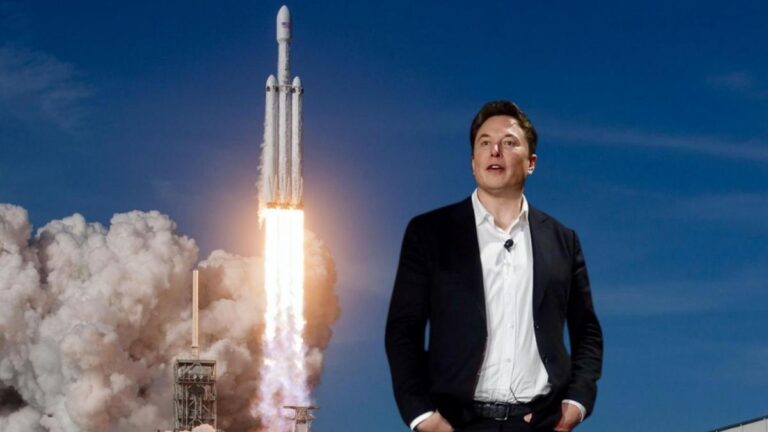
For years, Elon Musk has been known for making bold predictions that often sound impossible at first. From launching reusable rockets to building electric cars that dominate global markets, many of his ambitious goals have eventually become reality. Now, the billionaire entrepreneur has set another extraordinary target: he believes SpaceX could generate as much as $1 trillion in annual revenue by 2030.
The figure is astonishing. Very few companies in history have ever reached $1 trillion in market value, and almost none have produced that amount in yearly revenue. Yet Musk believes that SpaceX has the potential to become one of the most valuable and profitable companies on the planet.
But why is Musk so confident? What business opportunities could allow a space company to reach such an enormous level of revenue? And is the goal realistic or simply another ambitious vision from one of the world’s most famous entrepreneurs?
The answers lie in SpaceX’s rapidly expanding business model, technological advantages, and its growing influence over the future of space exploration and global communications.
The Rise of SpaceX
Founded in 2002, SpaceX began with a simple mission: to reduce the cost of space travel and eventually make humanity a multi-planetary species.
At the time, many experts doubted the company’s chances of success. The space industry was dominated by government agencies and established aerospace giants. Building rockets was expensive, risky, and technically difficult.
However, SpaceX achieved what many thought was impossible.
The company developed reusable rockets that dramatically lowered launch costs. It successfully transported astronauts to space and became one of the world’s leading providers of satellite launch services.
Today, SpaceX is no longer just a rocket company. It has evolved into a technology and communications giant with multiple sources of potential revenue.
Starlink Could Become the Biggest Money Maker
The biggest reason behind Musk’s trillion-dollar prediction is Starlink.
Starlink is SpaceX’s satellite internet business, designed to provide high-speed internet access to people around the world, especially in rural and remote areas where traditional internet services are limited.
The market opportunity is enormous.
Billions of people still lack reliable internet access, and many businesses, airlines, shipping companies, and governments require global connectivity solutions.
If Starlink continues expanding, it could generate hundreds of billions of dollars in revenue over the coming decades.
Unlike traditional telecommunications companies that rely on expensive ground infrastructure, Starlink uses thousands of satellites orbiting Earth, giving it a unique competitive advantage.
Many analysts believe that Starlink alone could eventually become one of the largest telecommunications businesses in history.
Dominating the Commercial Space Industry
SpaceX has also become the global leader in commercial rocket launches.
Governments, private companies, and scientific organizations depend on satellites for communications, navigation, weather forecasting, and national security.
The demand for satellite launches continues to increase every year.
Because SpaceX can reuse its rockets, it has significantly reduced launch costs compared to many competitors.
This cost advantage allows the company to win contracts from customers around the world and strengthens its position as the leading player in the commercial space market.
As the global space economy grows, SpaceX could continue benefiting from increasing demand for affordable access to space.
The Promise of Starship
Another reason Musk believes in SpaceX’s trillion-dollar future is Starship.
Starship is the company’s next-generation spacecraft designed to carry humans and cargo to the Moon, Mars, and beyond.
Although the project remains under development, Musk believes Starship could eventually transform the economics of space travel.
The spacecraft is intended to be fully reusable and capable of transporting large amounts of cargo at significantly lower costs.
If successful, Starship could open entirely new industries, including:
- Space tourism
- Lunar infrastructure
- Asteroid mining
- Deep-space research
- Interplanetary transportation
While these opportunities may seem distant today, Musk often thinks in terms of decades rather than years.
Government Contracts Continue to Grow
SpaceX has become an important partner for governments, particularly in the United States.
The company works closely with national space agencies and defense organizations on projects involving:
- Satellite launches
- Space exploration
- Military communications
- National security missions
Government contracts provide a stable and reliable source of revenue and help strengthen SpaceX’s financial position.
As global competition in space increases, governments are expected to spend even more on space technologies and satellite infrastructure.
This could create additional growth opportunities for SpaceX in the future.
The Global Space Economy Is Expanding Rapidly
The space industry is growing much faster than many people realize.
Experts predict that the global space economy could be worth trillions of dollars in the coming decades.
Several factors are driving this growth:
- Increased satellite demand.
- Expansion of internet services.
- Advances in space technology.
- Greater private-sector investment.
- Rising government spending.
SpaceX is positioned at the center of many of these trends.
If the company continues maintaining its technological leadership, it could capture a significant portion of this rapidly growing market.
Can SpaceX Really Reach $1 Trillion in Revenue?
Despite the optimism, achieving $1 trillion in annual revenue would be an extraordinary accomplishment.
The company still faces several challenges:
- Intense competition.
- Regulatory issues.
- High development costs.
- Technical risks.
- Economic uncertainty.
Many analysts believe reaching $1 trillion in revenue by 2030 may be extremely difficult.
However, critics have often underestimated Elon Musk’s companies in the past.
Tesla, for example, overcame years of skepticism to become one of the world’s most valuable car manufacturers.
SpaceX may face similar doubts today, but its track record suggests that ambitious goals should not be dismissed too quickly.
The Vision Beyond Profits
For Musk, the company’s financial success is not the final objective.
He has repeatedly stated that his ultimate goal is making humanity a multi-planetary civilization.
Generating enormous revenue would provide the financial resources needed to pursue large-scale projects such as establishing human settlements on Mars.
In this sense, the trillion-dollar vision is not only about money—it is about funding one of the most ambitious missions in human history.
Conclusion
Elon Musk’s prediction that SpaceX could generate $1 trillion in annual revenue by 2030 may sound unbelievable today, but the company has already achieved milestones that once seemed impossible.
Through Starlink, commercial launches, government contracts, and future projects like Starship, SpaceX has built a powerful business ecosystem with enormous growth potential.
Whether the company ultimately reaches the trillion-dollar target remains uncertain. However, one thing is clear: SpaceX is no longer simply a rocket company.
It is becoming one of the most influential technology businesses in the world and could play a major role in shaping the future of communications, transportation, and space exploration for decades to come.